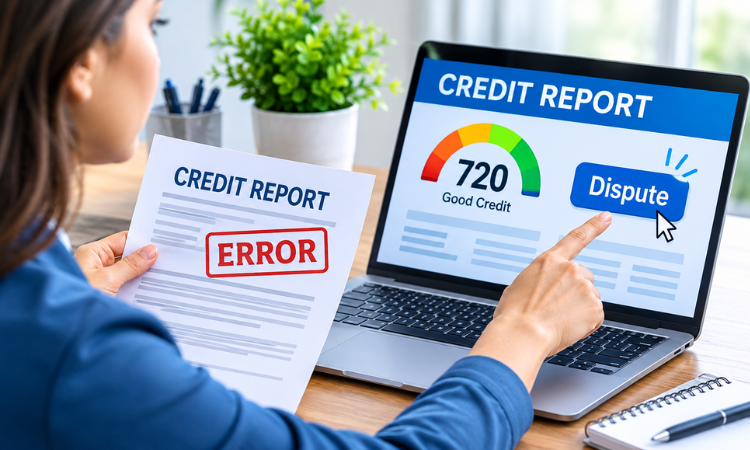
Your credit report plays an important role in your financial life. It provides lenders with information about your credit history, payment behavior, outstanding debts, and credit accounts. However, inaccurate information on your credit report can create challenges when applying for loans, credit cards, or other financial services.
Errors such as incorrect late payments, duplicate accounts, inaccurate balances, or accounts that do not belong to you may negatively affect your credit profile. Fortunately, consumers have the right to dispute inaccurate or incomplete information on their credit reports.
Understanding how to dispute errors on your credit report can help you take the right steps toward maintaining accurate credit information and improving your overall financial profile.
If you want to understand the broader credit repair process, read our detailed What Is Credit Repair and How Does It Work? A Complete Guide to learn more about credit report reviews, dispute processes, and credit improvement strategies.
What Are Credit Report Errors?
Credit report errors occur when information reported by creditors, lenders, or other data providers is incorrect, incomplete, outdated, or associated with the wrong consumer.
Some common credit report errors include:
- Incorrect Late Payments: Payments may be reported as late even when they were made on time.
- Wrong Account Balances: Your credit report may show an inaccurate outstanding balance.
- Duplicate Accounts: The same debt or account may appear more than once.
- Accounts That Do Not Belong to You: Your report may contain unfamiliar accounts due to reporting mistakes or identity theft.
- Incorrect Personal Information: Your name, address, or other identifying details may be inaccurate.
- Outdated Negative Information: Certain negative items may remain on your credit report beyond the legally permitted reporting period.
Identifying these inaccuracies is the first step toward correcting your credit report.
How to Dispute Errors on Your Credit Report
1. Obtain and Review Your Credit Reports
Start by reviewing your credit reports from Equifax, Experian, and TransUnion. Each credit bureau may maintain different information, so checking all three can help you identify discrepancies.
Carefully review your account history, payment records, balances, personal information, and negative entries. Make a note of any information that appears incorrect or unfamiliar.
2. Identify the Specific Errors
Once you have reviewed your credit reports, identify the exact items you want to dispute.
For example, if a credit card payment was made on time but reported as late, compare the reported payment history with your bank statements or payment confirmation records.
Be specific about the inaccurate information. Clearly identifying the account, reporting error, and reason for the dispute can help the investigation process.
3. Gather Supporting Documentation
Supporting documents can help establish why the information on your credit report is inaccurate.
Depending on the issue, useful documentation may include:
- Bank statements showing payment transactions
- Credit card statements
- Payment confirmation receipts
- Account closure letters
- Correspondence with creditors
- Identity theft reports, when applicable
Keep copies of your documents and avoid sending original records unless specifically required.
4. Submit a Dispute to the Credit Bureau
You can generally submit a dispute directly to the credit bureau reporting the inaccurate information. Disputes may be submitted online, by mail, or through other available methods.
Your dispute should include the account details, a clear explanation of the error, and relevant supporting documentation.
You may also contact the company that supplied the information, such as your lender or credit card issuer, and request that it investigate the inaccurate reporting.
5. Wait for the Investigation Results
Credit reporting agencies generally have 30 days to investigate a dispute under the Fair Credit Reporting Act (FCRA). Some investigations may take up to 45 days in certain circumstances.
The credit bureau typically reviews the information you provide and communicates with the company that reported the disputed item.
If the information is found to be inaccurate or cannot be verified, it generally must be corrected or removed. If the information is verified as accurate, it may remain on your credit report.
6. Review Your Updated Credit Report
After the investigation is completed, review your updated credit report to confirm whether the disputed information has been corrected.
If the error remains unresolved, you may consider submitting additional documentation, contacting the information provider, or exploring other available options.
Why Accurate Credit Reports Matter
Maintaining accurate credit reports is an important part of financial management. Incorrect information may affect how lenders evaluate your creditworthiness.
Accurate reporting can help you:
- Maintain a more reliable credit history
- Identify potential identity theft
- Understand your financial standing
- Address incorrect negative information
- Make informed decisions about future borrowing
Disputing an error does not guarantee an increase in your credit score. However, correcting inaccurate negative information may help improve your credit profile, depending on your overall credit history.
How Better Qualified Can Help With Credit Report Concerns
Better Qualified provides credit repair services for individuals seeking assistance with credit report concerns and inaccurate information.
Our services focus on helping consumers understand their credit report issues and explore appropriate steps toward addressing them.
Whether you are dealing with inaccurate late payments, questionable account information, or other credit reporting concerns, professional credit support may help you better understand the dispute process.
Better Qualified aims to provide trustworthy credit support and practical information to help consumers make informed financial decisions. Results depend on individual circumstances, and no specific credit score improvement is guaranteed.
Frequently Asked Questions
1. How do I dispute an error on my credit report?
You can dispute inaccurate information by contacting the credit bureau reporting the error and providing a clear explanation along with supporting documentation.
2. How long does a credit report dispute take?
Credit bureaus generally investigate disputes within 30 days. Certain cases may take up to 45 days.
3. Can disputing a credit report error improve my credit score?
Correcting inaccurate negative information may improve your credit score. However, the impact depends on the nature of the error and your overall credit history.
4. Can I dispute an error with all three credit bureaus?
Yes. If the same inaccurate information appears on Equifax, Experian, and TransUnion, you can submit disputes to each bureau reporting the error.
5. What happens if my credit report dispute is rejected?
If your dispute is rejected, you can review the investigation results, provide additional evidence, contact the information provider, or consider filing a complaint with the Consumer Financial Protection Bureau (CFPB), where appropriate.
Final Thoughts
Disputing errors on your credit report is an important step toward maintaining accurate financial information. By reviewing your reports, identifying incorrect entries, gathering supporting documentation, and submitting disputes to the appropriate credit bureaus, you can take action to address reporting inaccuracies.
Understanding the credit repair process can also help you make better financial decisions and maintain a healthier credit profile over time.
For additional information about credit repair and how the process works, Contact Better Qualified complete credit repair guide.