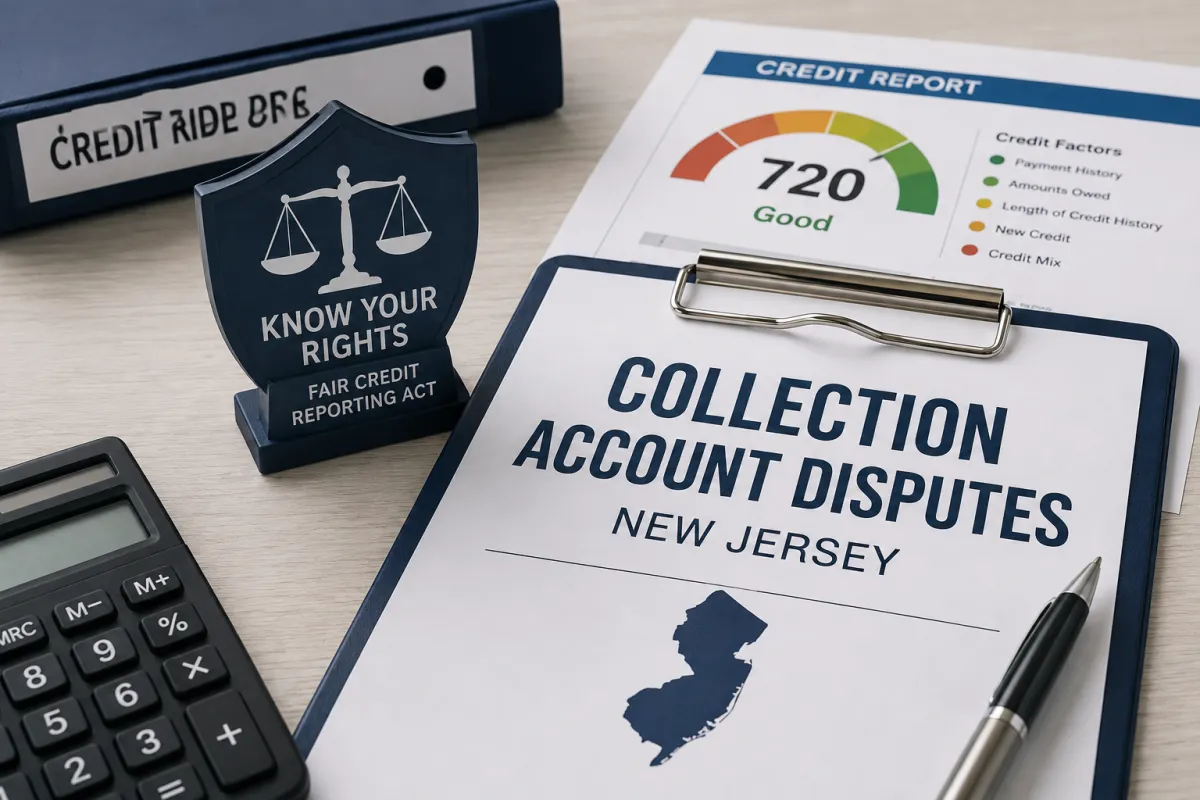
Collection Account Disputes New Jersey: How to Challenge Errors on Your Credit Report
Finding a collection account on your credit report can be stressful, especially when you believe the debt is inaccurate, outdated, duplicated, or does not belong to you. For New Jersey consumers, understanding how collection account disputes in New Jersey work can help you protect your credit profile and make informed financial decisions.
Better Qualified helps consumers identify potentially inaccurate or unfair information on their credit reports and navigate the dispute process with credit bureaus and creditors.
What Is a Collection Account Dispute?
A collection account dispute is a formal challenge to information reported about a debt that you believe is inaccurate, incomplete, outdated, or unverifiable.
For example, you may have grounds to dispute a collection if:
·The account does not belong to you
·The reported balance is incorrect
·The same debt appears more than once
·The account contains incorrect dates or payment information
·The debt has been reported inaccurately
·The account resulted from identity theft
·The information cannot be properly verified
Under the Fair Credit Reporting Act, consumers have the right to dispute inaccurate information appearing on their credit reports. The Consumer Financial Protection Bureau recommends disputing inaccurate information with both the credit reporting company and the company that supplied the information.
How Do Collection Account Disputes Work in New Jersey?
The first step is to carefully review your credit reports from Equifax, Experian, and TransUnion. Look at the collection agency name, original creditor, account balance, dates, account status, and other identifying information.
If you find an error, gather documentation that supports your position. Depending on the situation, useful documents may include account statements, payment records, correspondence, identity-theft documentation, or other evidence showing why the information is inaccurate.
You can then submit a dispute to the appropriate credit bureau and the company that furnished the information.
Credit reporting companies generally have 30 days to investigate a dispute, although certain circumstances can extend the investigation period to 45 days.
If the investigation determines that information is inaccurate or cannot be verified, the information may need to be corrected or removed.
Common Collection Errors That May Affect New Jersey Consumers
Collection accounts can negatively affect your credit profile when they contain inaccurate information. Some common problems include:
·Incorrect Account Ownership: A collection account may appear because of identity theft, mistaken identity, or inaccurate reporting.
·Wrong Balance: The balance shown on your credit report may not match the amount actually owed or may contain reporting errors.
·Duplicate Collections: The same debt may sometimes appear multiple times or be reported in a way that creates an inaccurate picture of your credit history.
·Incorrect Dates: Collection accounts can contain inaccurate dates relating to delinquency, account status, or reporting history.
·Unverifiable Information: If the information cannot be properly verified during a legitimate dispute investigation, the reporting may need to be corrected or deleted.
It is important to understand that accurate negative information generally cannot simply be removed because it hurts your credit score. The dispute process is intended to correct inaccurate or incomplete information, not erase legitimate financial history.
Why Professional Credit Dispute Assistance Can Help
Disputing collection accounts can involve reviewing multiple credit reports, gathering documentation, communicating with creditors and credit bureaus, tracking responses, and determining what additional action may be appropriate.
Better Qualified follows a structured process that begins by identifying potentially inaccurate or outdated information. The company then assists with disputes and intervention involving credit bureaus, creditors, and other relevant parties. Its credit improvement approach is built around personalized strategies and ongoing support.
The goal is not to promise a specific score increase or automatic deletion. Instead, the focus is on addressing legitimate credit-reporting problems and helping consumers work toward a stronger credit profile.
How Better Qualified Helps with Collection Account Disputes in New Jersey
If you are dealing with collection accounts in New Jersey, Better Qualified can help you understand what is appearing on your credit reports and identify issues that may require attention.
Its process includes:
1.Identify: Review your credit profile for potential inaccuracies and negative reporting.
2.Dispute: Challenge information that may be inaccurate, incomplete, outdated, or unverifiable.
3.Intervene: Communicate with credit bureaus, creditors, and other relevant institutions when additional follow-up is necessary.
4.Engage: Explore additional strategies when your situation requires further intervention.
With more than 20 years of experience in the credit repair process, Better Qualified provides personalized credit support for consumers working toward better financial opportunities.

Final Thought
An inaccurate collection account can make it harder to qualify for financing and other financial opportunities. If you are searching for collection account disputes in New Jersey, start by reviewing your credit reports carefully and identifying information that may be inaccurate or incomplete.
Better Qualified can help you understand your credit situation, identify potential reporting problems, and navigate the dispute process with a structured approach. Contact Better Qualified to discuss your credit goals and learn how professional credit repair assistance may fit your situation.
Frequently Asked Questions
1. Can I dispute a collection account in New Jersey?
Yes. Consumers have the right to dispute inaccurate or incomplete collection information on their credit reports. You can generally dispute the information with the credit reporting company and the company that furnished it.
2. What collection accounts can be disputed?
You may dispute collection accounts containing inaccurate information, such as incorrect balances, wrong account ownership, duplicate reporting, inaccurate dates, or information that cannot be properly verified.
3. How long does a credit dispute take?
A credit reporting company generally has 30 days to investigate a dispute. In certain situations, the investigation period may extend to 45 days.
4. Can an accurate collection account be removed?
Accurate negative information generally cannot be removed simply because it lowers your credit score. Disputes are intended to address information that is inaccurate, incomplete, or unverifiable.
5. Can Better Qualified help with collection account disputes?
Yes. Better Qualified provides credit repair assistance that includes identifying potential reporting errors, disputing inaccurate information, and communicating with credit bureaus and creditors when appropriate.
6. What should I do if my dispute is rejected?
Review the investigation results and supporting documentation carefully. If you still believe the information is inaccurate, you may have additional dispute or complaint options. The CFPB also provides guidance for consumers who disagree with the results of a credit report dispute.