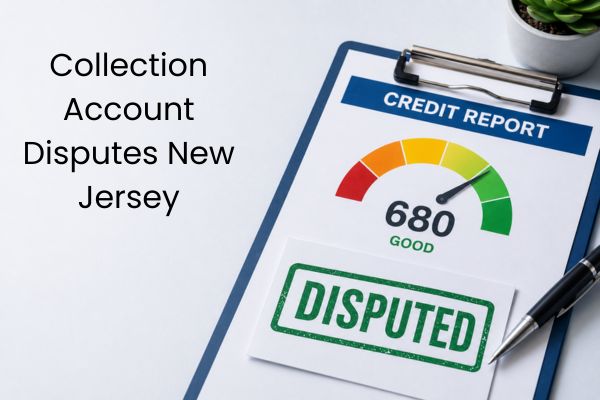
Collection Account Disputes New Jersey: How to Protect Your Credit Score
Collection accounts can have a serious impact on your financial future. If you have discovered a collection account on your credit report, it may be lowering your credit score and making it harder to qualify for loans, credit cards, mortgages, or rental housing. Fortunately, consumers have rights when it comes to Collection Account Disputes in New Jersey, and understanding the dispute process can help you take control of your credit.
What Is a Collection Account?
A collection account appears when an unpaid debt is transferred or sold to a collection agency. Once reported to the credit bureaus, the account can remain on your credit report for up to seven years and may significantly reduce your credit score. Collection accounts are among the most damaging negative items lenders review when evaluating creditworthiness.
However, not all collection accounts are accurate. Some may contain reporting errors, incorrect balances, duplicate entries, or even debts that do not belong to you.
Why You Should Review Collection Accounts Carefully
Many consumers assume that every collection account reported on their credit report is valid. In reality, mistakes happen more often than people realize. Common issues include:
Incorrect account balances
Duplicate collection entries
Accounts resulting from identity theft
Outdated or obsolete information
Unverified debts
Incorrect reporting dates
Under the Fair Credit Reporting Act (FCRA), consumers have the legal right to dispute inaccurate or incomplete information appearing on their credit reports. Credit bureaus are generally required to investigate disputes and verify the accuracy of reported information. If they cannot verify the account, it may need to be corrected or removed.
How Collection Account Disputes Work in New Jersey
The dispute process begins with obtaining copies of your credit reports from the major credit bureaus. Once you identify questionable collection accounts, you can submit a formal dispute requesting verification of the information.
During the investigation process, credit bureaus contact the data furnisher or collection agency to confirm the account details. If the collector cannot provide sufficient verification, the disputed item may be updated, corrected, or removed from your credit report. Typically, investigations are completed within approximately 30 days.
Consumers often find the process confusing because collection agencies and credit bureaus require proper documentation and detailed dispute information. This is where professional credit repair assistance can make a significant difference.
How Better Qualified Helps New Jersey Consumers
At Better Qualified, we specialize in helping consumers identify inaccurate, outdated, and unverifiable information on their credit reports. Our experienced team carefully reviews your credit profile, analyzes negative accounts, and develops a customized dispute strategy designed to address reporting errors. Better Qualified works directly with credit bureaus and creditors to challenge inaccurate information and help clients rebuild stronger credit profiles.
Our services include:
Collection account disputes
Charge-off disputes
Late payment challenges
Debt validation assistance
Credit score improvement strategies
Identity theft recovery support
We believe every consumer deserves a fair and accurate credit report. By addressing collection account errors, you may improve your credit profile and increase your opportunities for future financial success.
FAQs
1. How long do collection accounts stay on a credit report?
Collection accounts can generally remain on a credit report for up to seven years from the original delinquency date.
2. Can I dispute a collection account that belongs to me?
You can dispute any information that is inaccurate, incomplete, or unverifiable. Accurate and properly verified accounts are less likely to be removed.
3. How long does a collection account dispute take?
Most credit bureau investigations are completed within approximately 30 days after receiving a dispute.
4. Will removing a collection account improve my credit score?
Removing inaccurate collection accounts may help improve your credit score and overall credit profile.
5. What documents are needed for a dispute?
Supporting documents may include account statements, payment records, identity verification documents, and correspondence related to the debt.
6. Why should I work with Better Qualified?
Better Qualified provides professional credit analysis, dispute assistance, and personalized credit improvement strategies designed to help consumers address inaccurate reporting and strengthen their financial standing.
Take the First Step Toward Better Credit
If collection accounts are affecting your financial goals, now is the time to review your credit report and explore your dispute options. Professional guidance can help ensure that inaccurate or unverifiable information is challenged properly and efficiently.
Better Qualified has helped thousands of consumers navigate the credit repair process with confidence. Contact our team today to learn how we can assist with your Collection Account Disputes in New Jersey and help you move toward a stronger financial future.