Collection Account Disputes New Jersey: Steps to Challenge Credit Reporting Errors
A collection account can create problems when you are trying to qualify for a mortgage, auto loan, credit card, rental home, or other financial opportunity. For New Jersey consumers, the first step is understanding that a collection appearing on your credit report does not automatically mean the information is correct.
Collection Account Disputes New Jersey can involve inaccurate balances, accounts that do not belong to you, duplicate reporting, incorrect dates, or information that cannot be properly verified. If you find an error, federal law gives you the right to challenge inaccurate information on your credit report.
When Should You Dispute a Collection Account?
A collection should not be disputed simply because it is negative. The dispute process is designed to address information that is inaccurate, incomplete, outdated, or unverifiable.
Review the collection carefully for issues such as:
An account that does not belong to you
An incorrect balance
A debt reported more than once
Incorrect account or payment dates
A collection shown as unpaid after it was resolved
Information associated with identity theft
Reporting that cannot be supported or verified
An unfamiliar collection also does not necessarily mean fraud. A creditor may have transferred or sold an account to a collection company, causing a different company name to appear on your report.
What New Jersey Consumers Should Know About Debt Collection
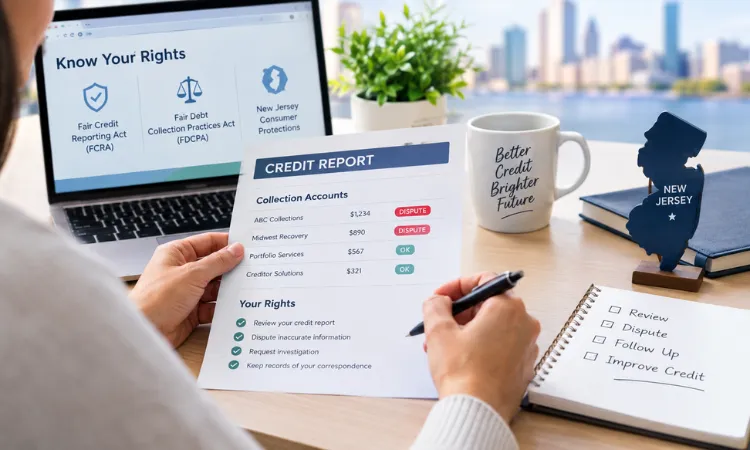
Collection disputes can involve both federal and New Jersey consumer protections. The Fair Credit Reporting Act (FCRA) gives consumers the right to dispute inaccurate information with credit reporting companies and the businesses that furnished the information. The Consumer Financial Protection Bureau recommends contacting both when you identify an error.
The Fair Debt Collection Practices Act (FDCPA) also provides protections when covered debt collectors attempt to collect consumer debts. Generally, collectors must provide information about the debt and explain how consumers can dispute it.
New Jersey also has specific consumer protections. For example, state law provides particular protections concerning medical debt. Under New Jersey's 2024 medical-debt legislation, certain medical debts cannot be included in consumer reports, including paid medical debt and medical debt below $500, subject to the law's requirements.
Because the rules can depend on the type and age of the debt, consumers should avoid assuming that every collection account follows the same legal process.
How to Dispute a Collection Account in New Jersey
1. Review All Three Credit Reports
Start by checking your reports from Equifax, Experian, and TransUnion. The same account may not appear identically on every report.
Record the collection agency, original creditor, balance, account dates, and status.
2. Gather Supporting Documents
Collect anything that helps explain the problem. This could include payment records, account statements, letters from creditors, settlement documents, or identity-theft records.
3. Submit a Clear Written Dispute
Explain exactly what information is incorrect and why. Include copies of relevant evidence rather than sending original documents.
You can dispute the information with the credit reporting company and the company that furnished the information. The CFPB recommends clearly identifying the disputed information and explaining the reason for the dispute.
4. Keep Records of Everything
Save copies of your dispute letters, supporting documents, confirmation numbers, responses, and dates. A well-organized record can make follow-up much easier.
Credit reporting companies generally investigate disputes within 30 days, although federal rules allow additional time in certain circumstances.
What About Older Debts?
An old collection can raise separate questions about how long a creditor may have to pursue a lawsuit. New Jersey generally has a six-year limitations period for many contractual claims under N.J.S.A. 2A:14-1, but the specific calculation can depend on the type of obligation and circumstances.
Importantly, the age of a debt and the length of time it may appear on a credit report are different issues. Do not assume that an old collection automatically disappears simply because it is past a particular date.
If a collector is contacting you about an older debt, consider getting legal advice before making a payment or acknowledging the debt, particularly when the applicable limitation period is unclear.

How Better Qualified Can Help
Handling collection account disputes can require reviewing several credit reports, identifying inconsistencies, preparing documentation, communicating with reporting companies, and tracking responses.
Better Qualified helps New Jersey consumers review their credit profiles and identify potentially inaccurate, outdated, or unverifiable information. Its process includes reviewing credit reports, disputing qualifying information, and communicating with relevant creditors or credit bureaus when appropriate.
The goal is to address legitimate reporting problems not to promise removal of accurate negative information.
Final Thoughts
A collection account does not automatically mean your credit report is wrong, but it is worth checking carefully. If you find inaccurate or incomplete information, taking prompt, documented action can help ensure your credit history more accurately reflects your financial record.
If you are dealing with collection account disputes New Jersey and are unsure where to begin, contact Better Qualified to review your credit situation and learn what options may be available for addressing legitimate reporting concerns.